Carlo Berger · 15 November 2026
How Independent Researchers Source Custom Glass Containers for Portable Field Experiments in Remote Locations
Independent researchers often begin the process by defining precise specifications for glass containers that must withstand transport across difficult terrain while preserving sample integrity during extended field studies, and this initial step involves collaboration with design engineers who translate experimental requirements into measurable parameters such as wall thickness, neck diameter, and thermal shock resistance.
Specialized manufacturers located in industrial zones across North America and Europe maintain dedicated teams that handle small-batch custom orders, which allows researchers to request modifications like reinforced bases or integrated measurement markings without committing to large production runs that exceed typical project budgets.
Establishing Contact With Niche Glass Fabricators
Researchers frequently consult industry directories maintained by scientific equipment associations to identify fabricators capable of producing borosilicate or quartz containers that meet both portability and durability standards, and these directories list contact details along with material certification records that help verify compliance with international quality benchmarks.
Direct outreach occurs through secure online portals where project briefs are uploaded, including details about expected temperature ranges and chemical exposure levels that the containers will encounter during fieldwork in locations such as high-altitude deserts or Arctic research stations.
Navigating Material Selection and Testing Protocols
Material choice centers on borosilicate glass for its low coefficient of thermal expansion, which proves essential when containers move between extreme cold storage and ambient conditions during transport, while quartz variants appear in experiments requiring higher optical clarity for spectroscopic analysis on site.
Third-party testing laboratories perform pressure and impact simulations before shipment, and researchers receive detailed reports that document performance under conditions replicating remote logistics challenges, including vibration patterns from helicopter deliveries or mule-train transport.
Coordinating Logistics for Remote Delivery
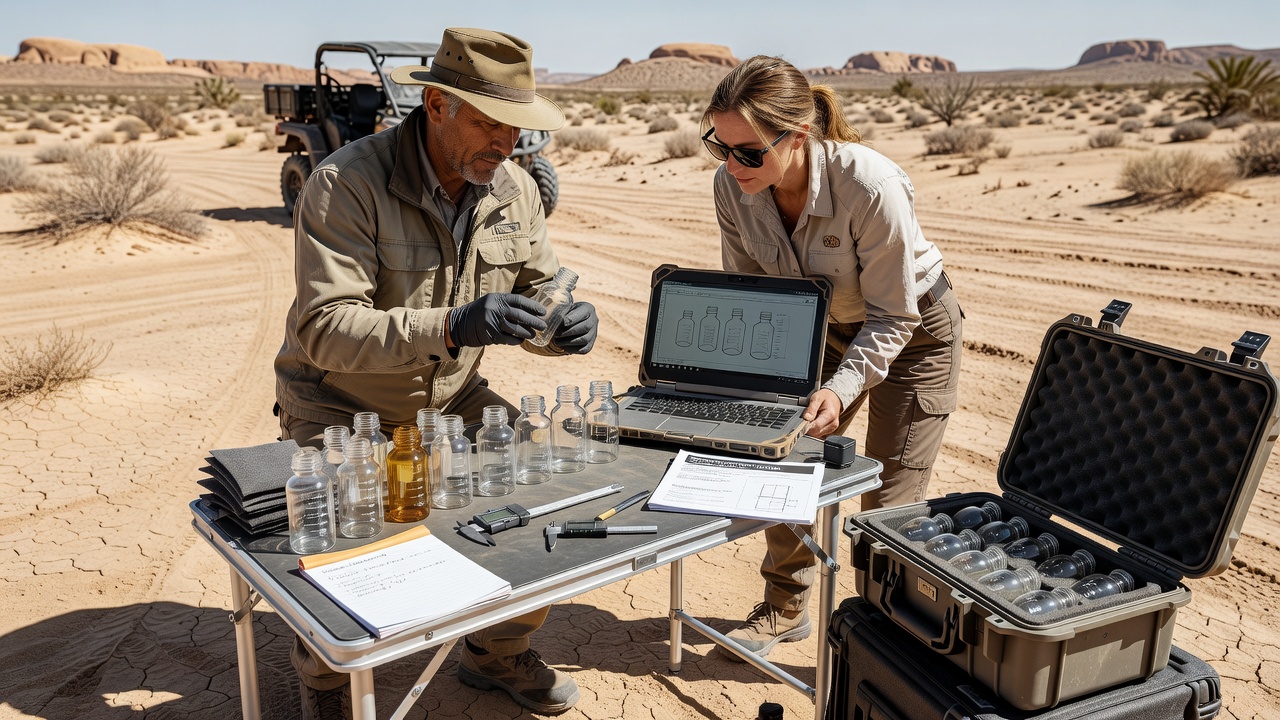
Shipping arrangements rely on specialized freight forwarders experienced with scientific cargo, and these providers coordinate customs documentation for cross-border movement while ensuring temperature-controlled packaging prevents breakage during multi-week transit periods to isolated research sites.
Data from supply chain analyses conducted by organizations such as the National Science Foundation indicate that advance scheduling of at least eight weeks minimizes delays caused by seasonal weather restrictions in polar or mountainous regions.
Adapting to Regulatory and Environmental Constraints
Compliance with transport regulations requires researchers to verify that container designs incorporate pressure-equalization features when destined for high-altitude operations, and documentation packages often include declarations aligned with standards from the European Commission on hazardous material packaging for laboratory samples.
November 2026 saw several updates to international air cargo protocols that affected how glassware shipments are labeled and manifested, prompting independent teams to adjust their sourcing timelines accordingly when planning expeditions scheduled for the following field season.
Case Examples From Recent Expeditions
One group conducting soil microbiome studies in Patagonia worked with a Canadian fabricator to produce 50-milliliter vials featuring threaded caps that accepted both standard septa and vented filters, and the resulting containers arrived intact after a 12-day overland journey that included river crossings.
Another team focused on atmospheric sampling in the Australian outback sourced custom 250-milliliter flasks with graduated markings etched internally, which eliminated the need for separate measuring tools and reduced overall kit weight during helicopter-supported deployments.
Conclusion
Successful sourcing of custom glass containers for remote fieldwork depends on early specification development, verified supplier partnerships, and coordinated logistics planning that accounts for both material performance and regulatory requirements, and researchers who follow these steps consistently report reliable sample containment across diverse environmental conditions.