Amir Keller · 6 September 2026
The Impact of Material Sourcing Variations on Product Durability in Precision Glassware Retail
Precision glassware used in laboratories, medical facilities, and research settings depends heavily on consistent material quality, yet sourcing variations across global suppliers create measurable differences in how these products withstand repeated use, thermal stress, and chemical exposure. Manufacturers obtain borosilicate glass, quartz, and soda-lime compositions from regions that include Europe, North America, and Asia, each with distinct raw material purity levels, melting processes, and quality controls that directly influence final durability metrics such as thermal shock resistance and mechanical strength.
Core Factors in Material Sourcing
Raw material origins determine trace element content in glass batches, and observers note that suppliers in Germany and the United States often maintain tighter controls on iron oxide and alkali impurities compared with some facilities in Southeast Asia, leading to differences in long-term performance under corrosive conditions. Data from industry testing shows that even small compositional shifts alter the coefficient of thermal expansion, which governs how well a vial or beaker survives rapid temperature changes without cracking. Retailers who track supplier certifications find that products labeled with identical specifications sometimes exhibit divergent failure rates once placed in high-volume laboratory environments.
Effects on Durability Metrics
Thermal shock testing reveals that glassware sourced from higher-purity European batches typically tolerates temperature differentials up to 180 degrees Celsius before fracture, whereas batches from certain Asian suppliers may show reduced tolerance around 140 degrees Celsius under identical protocols. Mechanical impact resistance follows similar patterns, with studies indicating that controlled annealing processes used by North American producers result in fewer internal stresses and therefore lower breakage during shipping and handling. Chemical resistance measurements further demonstrate that minor variations in boron content affect resistance to alkaline solutions, a critical factor for labs that sterilize equipment repeatedly with aggressive cleaning agents.
One study conducted across multiple production runs documented that vials manufactured from recycled cullet containing inconsistent feedstock displayed 15 percent higher micro-crack formation after 50 autoclave cycles compared with virgin material equivalents. Retail inventory records confirm that durability gaps translate into higher return volumes and customer complaints when sourcing shifts occur without corresponding quality verification steps.
Supply Chain Influences and Retail Outcomes
Global supply disruptions that began intensifying in 2024 prompted many precision glassware retailers to diversify suppliers, and figures from trade reports reveal that companies adopting multi-region sourcing strategies experienced fewer stockouts but encountered greater variability in product lifespan. September 2026 marks the scheduled implementation of updated international standards for laboratory glass composition documentation, which will require clearer disclosure of raw material provenance and impurity profiles on product specifications. Retailers preparing for these changes have begun auditing current inventories to identify which product lines may require reformulation or supplier replacement to maintain compliance and performance consistency.
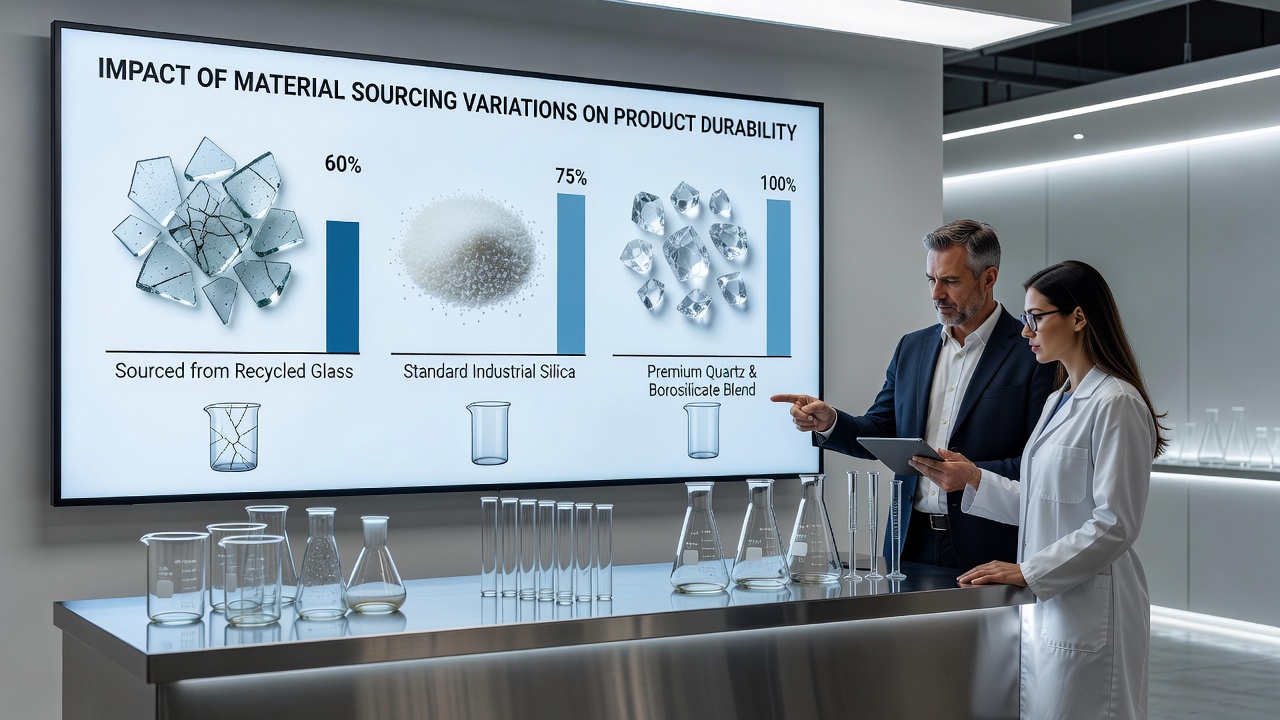
Cost considerations also play a documented role, because lower-priced glass from certain regions can reduce procurement expenses by 20 to 30 percent, yet longitudinal data collected by independent testing laboratories shows elevated replacement rates that offset initial savings within 18 months of regular laboratory use. Retailers who publish durability test results alongside product listings help customers make informed decisions that align with specific application demands, whether those involve high-temperature sterilization or long-term chemical storage.
Industry Data and Research Findings
According to research published by the National Institute of Standards and Technology, standardized measurement protocols for glass durability now incorporate accelerated aging tests that simulate five years of laboratory exposure in weeks, enabling earlier detection of sourcing-related weaknesses. Additional findings from Canadian materials science programs indicate that trace lanthanide elements introduced through certain mineral sources can enhance or diminish UV transmission stability, an attribute important for light-sensitive applications. Retailers monitoring these developments integrate updated test requirements into their quality assurance workflows to reduce liability and improve customer retention.
Conclusion
Material sourcing variations produce quantifiable differences in thermal, mechanical, and chemical durability of precision glassware, and retailers who maintain rigorous supplier oversight alongside updated testing standards position themselves to deliver consistent product performance. As new documentation requirements take effect in September 2026, transparent sourcing practices will become increasingly central to maintaining both regulatory compliance and customer trust across the sector.